
The Real Meaning Behind OpenAI’s Postponed IPO
The Real Meaning Behind OpenAI’s Postponed IPO
OpenAI has lost the IPO race to Anthropic and SpaceX. Unless a rescue transaction is orchestrated in private markets, the ripple effects will be far-reaching.
Briefly put, OpenAI aligned itself with the high-profile narrative of existential risk led by Anthropic over the past year in order to... justify pulling its IPO plans.
In reality, OpenAI blames an increasingly controversial public opinion environment and claims it needs time to "rein in" its all-too-powerful models.
This explanation—skillfully slipped in alongside speeches on existential risk to humanity—raised no eyebrows among financial market participants. Yet, it warrants a closer look to decode its true implications.
Over the past twelve months, OpenAI has paid the price for spreading itself too thin compared to Anthropic. While Anthropic stayed laser-focused on improving its models and developer tools, OpenAI pursued an all-out growth strategy. Today, according to various estimates, token consumption is concentrated at nearly 60% in software development, an area where Anthropic holds a dominant lead.
Falling behind in its growth trajectory, OpenAI maintains its market share leadership among more "traditional" users. The launch of the new Codex and massive promotional campaigns are designed to regain market share and prevent Claude from entrenching itself too deeply in user workflows—but this will come at the expense of further deteriorating profitability fundamentals. Hence the postponed IPO.
Our view is that OpenAI’s strategists are placing their bets on the window when Anthropic—once listed and closely scrutinized by public markets—attempts to demonstrate operational leverage. This would create an opportunity for OpenAI to launch an aggressive counter-attack against its rival.
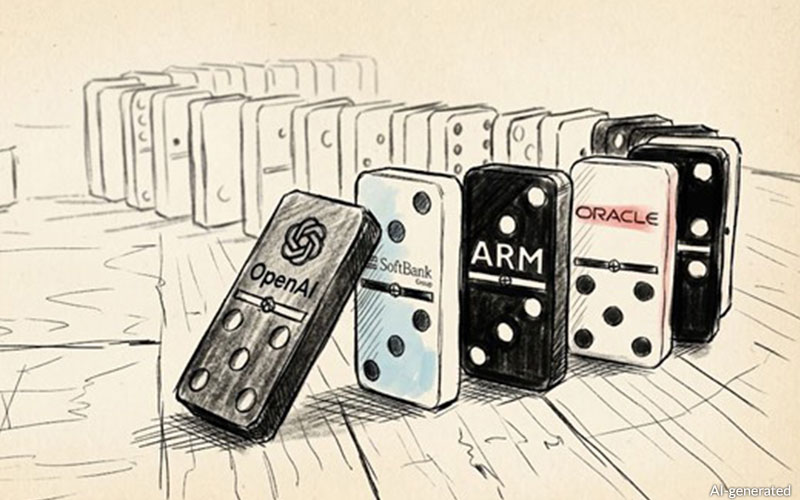
However, to pull this off, OpenAI still needs sufficient cash reserves to meet its commitments and fund this promotional campaign. More than ever, private markets are being called to the rescue, precisely as rising interest rates and headwinds in private credit / private equity put the asset class under strain. A failed refinancing for OpenAI would carry major consequences for SoftBank—Japan's largest market capitalization—as well as Oracle, ARM, and many others.
OpenAI is likely not systemic—even if that is the case it makes to regulators—but the damage to equity and credit markets would be very real should its refinancing machinery stall in the near future.
This content is published strictly for informational and educational purposes by Stilgar Asset Management, a portfolio management company authorized by the French Financial Markets Authority (Autorité des Marchés Financiers – AMF) under number GP-20260015. It does not constitute investment advice (within the meaning of Article D. 321-1 of the French Monetary and Financial Code), an investment recommendation, or an offer or solicitation to buy, sell, or subscribe to financial instruments.
The analyses, opinions, and estimates expressed reflect the judgment of Stilgar Asset Management as of the date of publication and are subject to change without notice. Statements regarding market trends are based on conditions observed as of that date and do not constitute a commitment or guarantee of future outcomes. References to specific companies or securities are provided for illustrative purposes only.